On basara tarama kiriku
〒771-1506 徳島県阿波市土成町土成字前田185
👁️ Street View in front of the temple 🧭 Directions with Google Maps (to the temple gate) 🚗 By car: to the car park 📍 Open in a map app
Temple map
Buildings found in OpenStreetMap. Faded: uncertain position. The map may be incomplete: a building missing here may still exist on site. See the temple in Google Maps ↗
Blue: trail from the previous temple · red: to the next temple · 🛖: henro goya (hut). Tap a trail to open Street View at that spot.
- Okudaya · 1,8 km · 5 000 ¥ en dortoir, 5 500 ¥ en chambre · dortoir ou chambre individuelle
- km 3,0 · n°57 Donari ヘンロ小屋第57号 土成 · Street View
🚗 To temple 9 Hōrin-ji : 2.7 km · 10 min by car
Pilgrims’ trail from OpenStreetMap; walking time computed from the terrain, plus half for breaks.
🗺️ All the stages at a glance: on foot or by public transport →
History
An old gate, a rebuilt temple
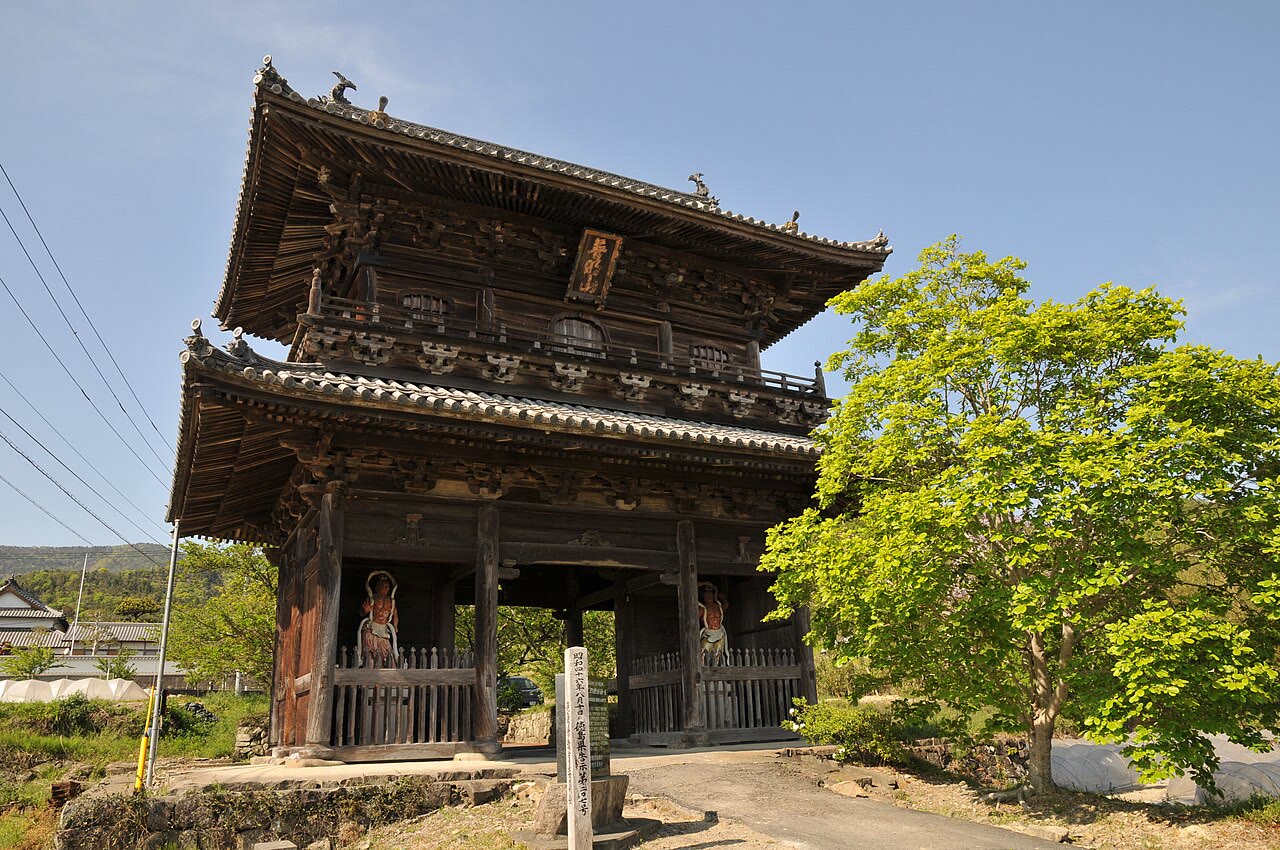
Kumadani-ji’s Niōmon gate, dated 1687 and protected by the prefecture, preserves an old state of the precinct. It contrasts with the main hall, destroyed by a fire in 1927 in which the venerated image was also lost. The hall was rebuilt in 1940, but the war interrupted work on the whole complex: it was only completed in 1971, with the consecration of a new statue. The gate, 12.3 metres high, combines Japanese and Chinese forms; its upper storey is decorated with painted celestial figures.
Two gates: the Niōmon and the Chūmon
Kumadani-ji has two gates, which are easily confused. The first, the Niōmon (仁王門), is the large gate of 1687: two storeys, 12.3 metres high, one of the most imposing on the pilgrimage. It stands down below, among the fields, at the start of the approach (sandō) that climbs to the temple; two Niō guardians watch over either side of the passage.
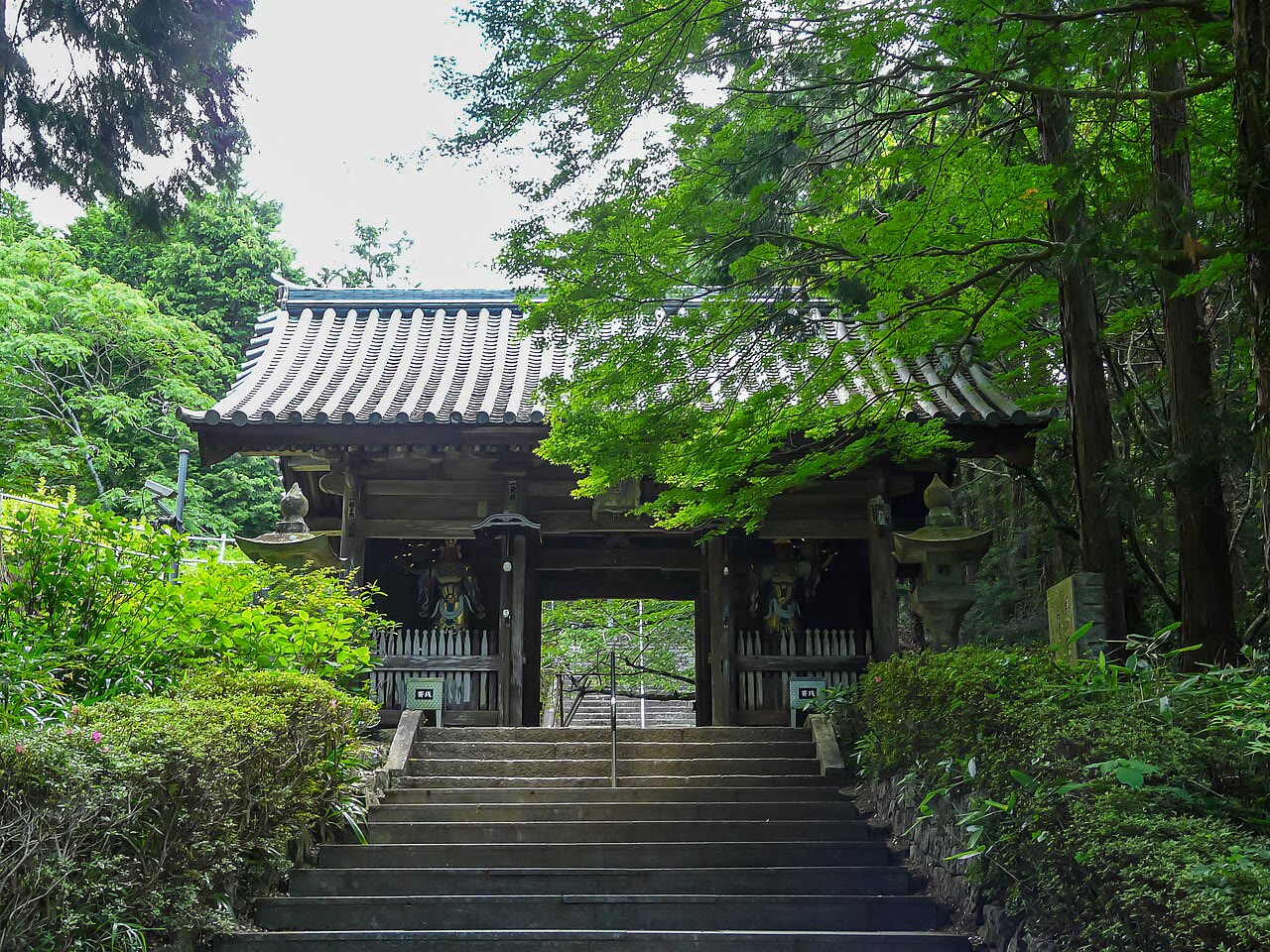
Higher up, at the foot of the stone staircase leading to the hondō, stands a second, smaller gate with a single roof: the Chūmon (中門, “middle gate”). It too shelters two guardian statues, the two heavenly kings (niten, 二天); this is why it is often mistaken for the Niōmon in photos.
The gift of Kumano
The tradition of the origins gives another meaning to the image of Kannon: in 815, Kōbō Daishi is said to have received a small golden statue from Kumano Gongen while he was practising in the valley. He then carved a life-size thousand-armed Kannon and placed this gift inside it, before enshrining it as the main image in an oratory. A shrine in the precinct is still dedicated to Kumano Gongen, whose protective role this legend recalls.
Description
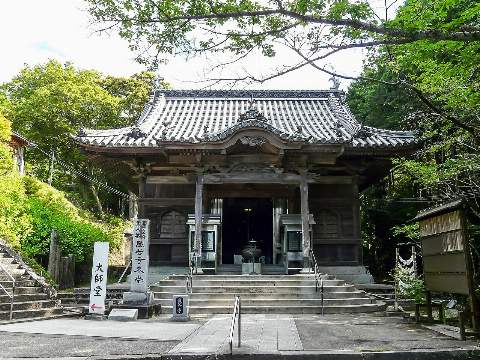
Photo : Naokijp, CC BY-SA 4.0, Wikimedia Commons