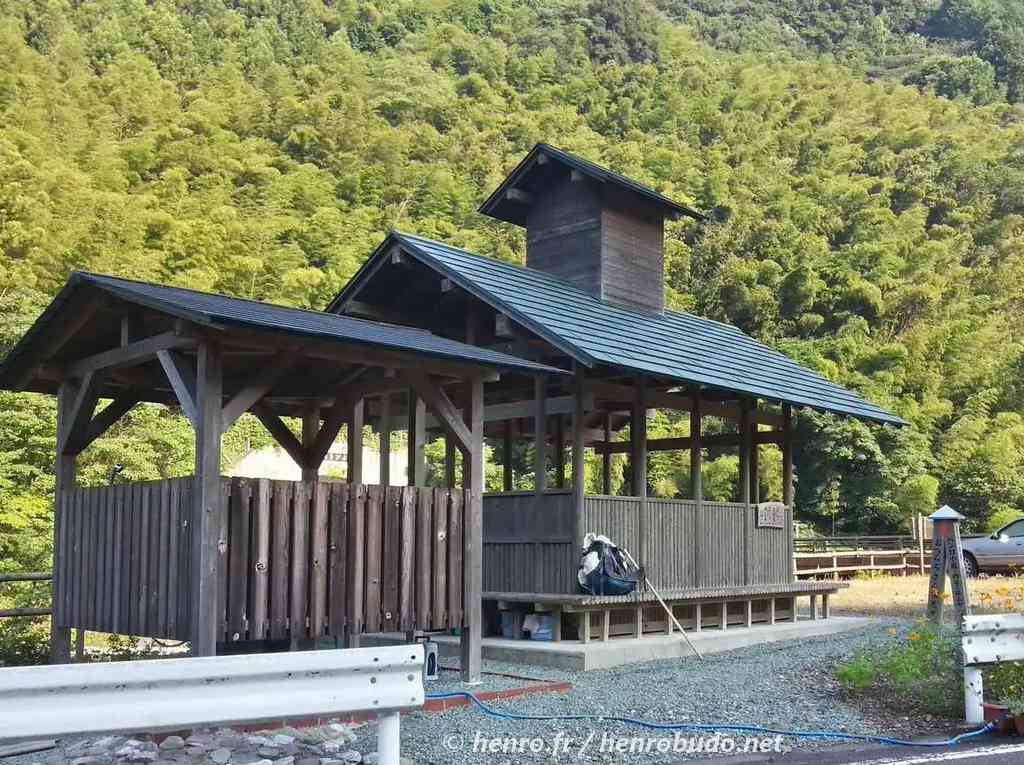
Henro Goya
After nojuku and zenkonyado, let us continue this series of articles on where to stay during the Shikoku pilgrimage with the famous cabins for pilgrims, the henro huts.
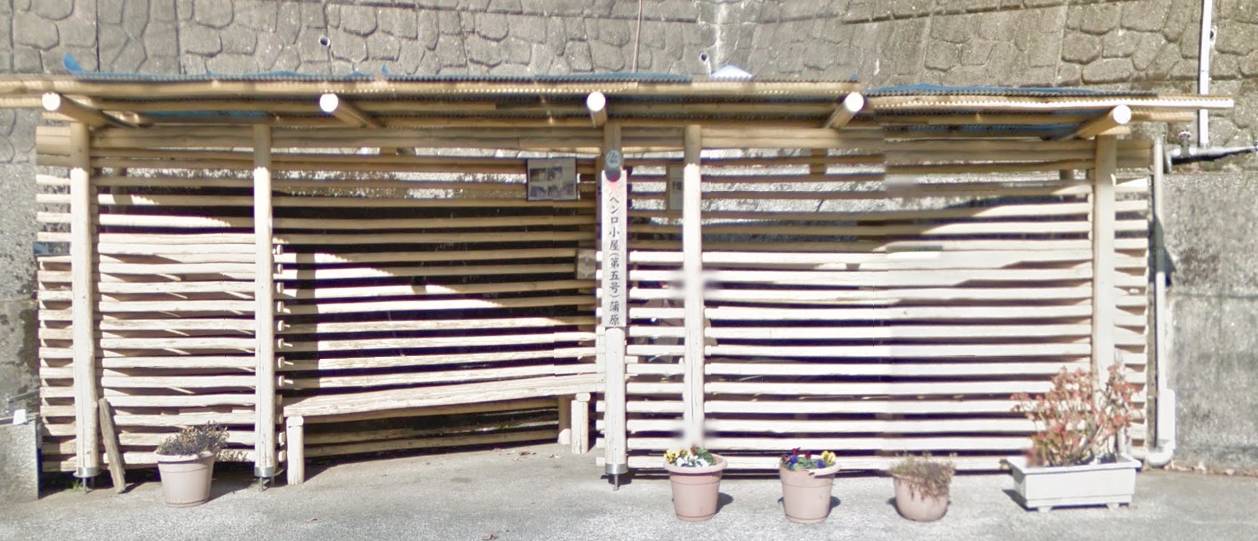
Definition: Henro Hut or Henro Goya (遍路小屋) is a small shelter made available to Shikoku pilgrims by local authorities. They are generally small open cabins with benches and a table. There are sometimes restrooms and running water.
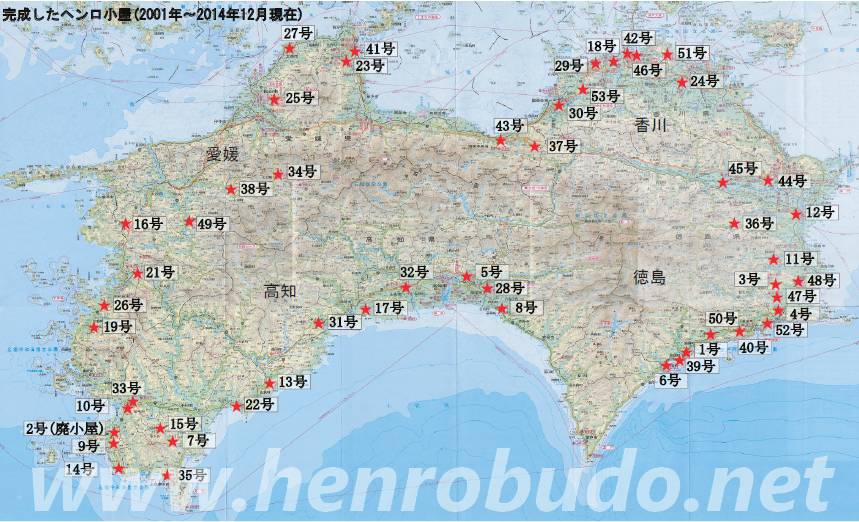
There are 55 official Henro Huts; the first was built in 2001. They are numbered chronologically. The Henro Hut numbers bear no relation to the numbers of the Shikoku pilgrimage temples.
The project to build huts where pilgrims can rest was launched in 2001 by Uta Ichiyō, an architect from the south of Tokushima prefecture and a former professor at Kindai University. The aim is to build 88 huts, in reference to the 88 temples of the pilgrimage, plus a final one that will crown the project. Uta Ichiyō designs each hut to suit its site; local residents and the project association raise donations and build it as volunteers, on land lent by its owner or by the municipality. The first one was built in 2001 in Kaiyō (Tokushima); by October 2024, 59 huts had been built, 5 of which can no longer be used (source: official project website).
While some aruki henro use them for sleeping (you can sleep on the bench, on the floor, or pitch a freestanding tent that will stay dry in bad weather), most pilgrims simply rest for a few minutes before moving on. In rainy weather or extreme heat, it is pleasant to come across a Henro Hut along your way. It also provides an opportunity to meet other pilgrims or locals who will not hesitate to strike up a conversation.
Henro Goya Shikoku Pilgrimage Gallery
Many henro huts are found in Kōchi Prefecture. Hut 54 in Shimanto is also an illustration of the hut style in this prefecture. While some huts are relatively isolated, others such as number 55 are wedged between buildings. Sometimes there is a shower, but that is quite rare.