Shinnen and the first zenkonyado: who gave pilgrims a bed in 1687?
In 1687, there were almost no inns along the Shikoku pilgrimage route. When night fell, where could a pilgrim sleep? The guide written by Shinnen, the oldest surviving guide to the pilgrimage, answers with names. “Ichibei, in the village of Ina, offers lodging.” “In the village of Tai, everyone is kind-hearted and lends a roof.” Some forty people are named this way, from one end of the island to the other. This is no accident. It is the work of a man who had slept outdoors far too often.
Shinnen’s nights
Shinnen was not the head of a temple. He was a wandering monk (zuda, 頭陀) living in Terajima, a district of Osaka. Those who knew him say he went around Shikoku “more than ten times” (the monk Jakuhon, in 1689) or “more than twenty times” (the monk Chūgi, in 1690).
Chūgi describes him in a few words:
眞念はもとより頭陀の身なり。麻の衣やうやく肩をかくして餘長なく、一鉢しばしば空しく、たゞ大師につかへ奉らんとふかく誓ひ、遍禮せる事二十餘度に及べり。
“Shinnen has always been a wandering monk. His hemp robe barely covers his shoulders, with not an inch to spare; his bowl is often empty. He made a deep vow to serve the Great Master, and he has made the pilgrimage more than twenty times.”
And here are his nights, as told in the guide’s preface by Kōtaku, a monk from Mount Kōya who walked with him:
杳に人家なくしてハ岩もる水に枕をかたむけ、遠く客舎を絶てハ、山を帯雲をしとねとせられし
“Where there was not a house in sight, he laid his head by the water seeping from the rock. Where every inn was far away, he took the mountain for his sash and the clouds for his bedding.”
Twenty circuits of Shikoku, at a time when each one took forty to fifty days: that adds up to a great many evenings without a roof. Kōtaku adds that these nights gave birth to his compassion for those who lose their way. Chūgi says the same about lodging: “In Shikoku there are places where pilgrims, having no lodging, suffer hardship. Shinnen grieved over this.”
He could have left it there. Instead, he did four things.
Finding a roof in the 17th century
Commercial inns (hatago) existed in Japan, but hardly any along this route. The guide mentions them only once, in the town of Niiya: “はたごやも有”, “there are also inns”.
So people slept elsewhere. In temples: the monk Chōzen, who made the circuit in 1653, spent most of his nights in them. In the “relay temples” (ekiroji, 駅路寺): as early as 1598, the lord of Awa (Tokushima) had tasked these temples with accommodating travellers and keeping watch over them. And already with a few devout people: in Uwajima, an old man named Imanishi Densuke opened his door to anyone who said they were a pilgrim.
For Inada Michihiko, who edited the guide, this was the biggest problem for ordinary people setting out on the pilgrimage: with no inns, they had to rely on wayside halls and private homes.
And nothing was certain. The same Chōzen was driven out of a relay temple by a stingy monk, turned away one evening at temple 28, and spent a night under a leaking roof. And Chōzen was a learned monk with connections. For a farmer who knew no one, every evening was a lottery.
First answer: a shelter
In 1682, five years before the guide, Shinnen had a lodging built. A register of the Tosa domain records it: “Shinnen, of Terajima in Osaka, had a lodging built in fulfilment of a vow, for pilgrims going to Ashizuri, and named it Shinnen-an.”
The spot was well chosen. Ichinose lies in the middle of the longest stretch of the pilgrimage, where pilgrims left their bags for the round trip to Cape Ashizuri and temple 38. You have to have walked that road several times to know that this is where a roof is missing.
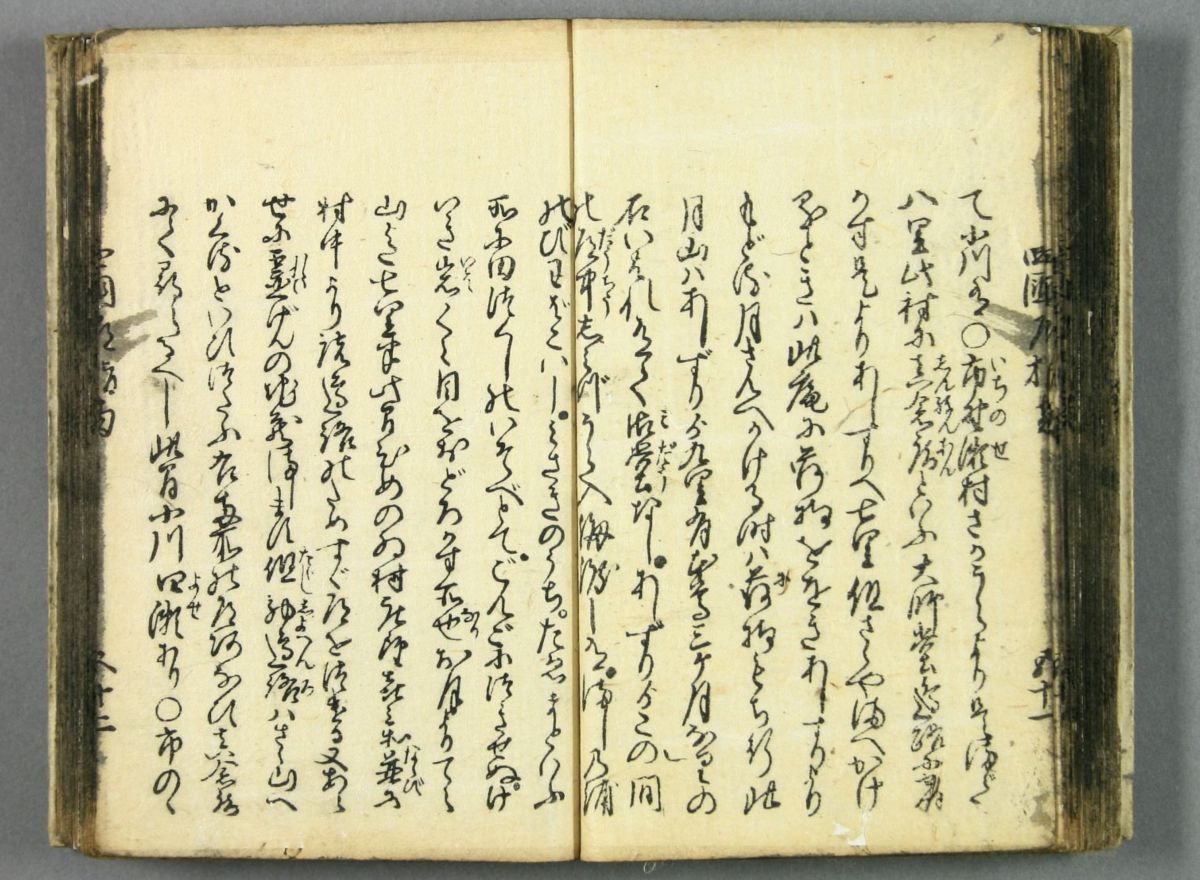
此村に真念庵といふ大師堂、遍路に宿かす。
“In this village, a hall dedicated to Kōbō Daishi, called Shinnen-an, gives pilgrims shelter.”
Chūgi writes in 1690 that Shinnen “raised a shelter for pilgrims and eased their hardship”. Were there others? None has been found. The Shinnen-an, however, still exists.
Second answer: printed names
The guide describes the route village by village. Among the distances, passes and rivers, it slips in lines like these:
おゑつか弥三右衛門、遍路をいたはりやどかす。
“Yasōemon, of Oetsuka, looks after pilgrims and lends them a roof.”
くぼ川村、此町しもゝと七郎兵衛宿をかし、善根なす人あり。
“Village of Kubokawa: in this town, Shichirōbei takes in pilgrims; there are people here who do good works.”
たい村、皆々志有、やどかす。
“Village of Tai: everyone is kind-hearted and lends a roof.”
That is what was new. Before Shinnen, you found a roof by luck or through connections. After him, anyone could know which door to knock on, for the price of a small book.
In our copy, we counted some forty names in thirty-three places: two in the province of Awa (Tokushima), eight in Tosa (Kōchi), eighteen in Iyo (Ehime) and five in Sanuki (Kagawa). Professor Inada Michihiko, who edited the guide, also counts about forty. The guide also says where there is nothing: before the climb to temple 12, “山坂にして宿なし”, “mountain road, no lodging”.
Who were these hosts?
Established people. Two village headmen (shōya), at Makigawa and Miuchi; at nearby Masaki, the headman’s house “never closes its door, from generation to generation”. Two indigo dyers (kon’ya), at Shimomura near Uwajima and at Sakurai near Imabari. Merchant houses at Kuma. Sometimes a whole village, as at Tai.
There were also halls where one could sleep. At Jōrinji, a man named Shichirōbei rebuilt a ruined Jizō hall and “offers lodging” there. Below the Misaka pass, Chōemon built a hall dedicated to Kōbō Daishi for the same reason. At Ōse, the family of Seizaemon kept a hermitage “so that pilgrims may find rest there”.
Lending or giving?
The guide mostly uses yado kasu (宿かす), “to lend a roof”. Four times it writes yado o hodokosu (宿をほどこす), “to offer lodging”: the verb of religious giving. It never mentions a price.
Was it free? The historian Shinjō Tsunezō is sure of it for the hosts whose kindness the guide praises. For the others, we have better than a guess: a witness.
The proof: Yano Ichien, 1691
In the spring of 1691, four years after the guide appeared, a local notable from Kyūshū named Yano Ichien made the pilgrimage and kept a diary. At None, in Tosa, he slept at Gorōemon’s. At Ida, at Yahei’s.
Both men are in Shinnen’s guide: “のね浦、五郎右衛門宿をかす”, “いた村、弥兵衛其外宿かす”. And for these two nights, Yano notes no payment. Yet he kept careful accounts: when he paid for firewood (kichin) at the foot of Busshōzan, he wrote it down. That happens only once in forty-five stops, thirty-eight of them in private homes.
So here is a layman from another island, with no connections in the temples, knocking on doors the book points to, and being taken in without being asked for anything. The system works. It is four years old.
Third answer: stories
In 1690, Shinnen published a collection of tales, the Shikoku henrei kudokuki (四国徧礼功徳記), “the merits of the pilgrimage”. Several say the same thing: whoever helps a pilgrim is rewarded, whoever turns one away is punished. A family that lodges a pilgrim and serves him chestnuts receives a chestnut tree that bears fruit four times a year. The dyer Shōbei, the one in the guide, “lodges and feasts pilgrims gladly, not even turning away the sick”.
And the book observes:
近年分別して善を修する人おほし。接待をし、宿をかしなど、こゝろざしあさからず見えける。
“In recent years, many people, having thought it over, practise good deeds. They offer settai, they take pilgrims in: one can see their hearts are not lukewarm.”
“In recent years”: in 1690, a contemporary sees the custom growing. This is also the first text about Shikoku in which the word settai appears.
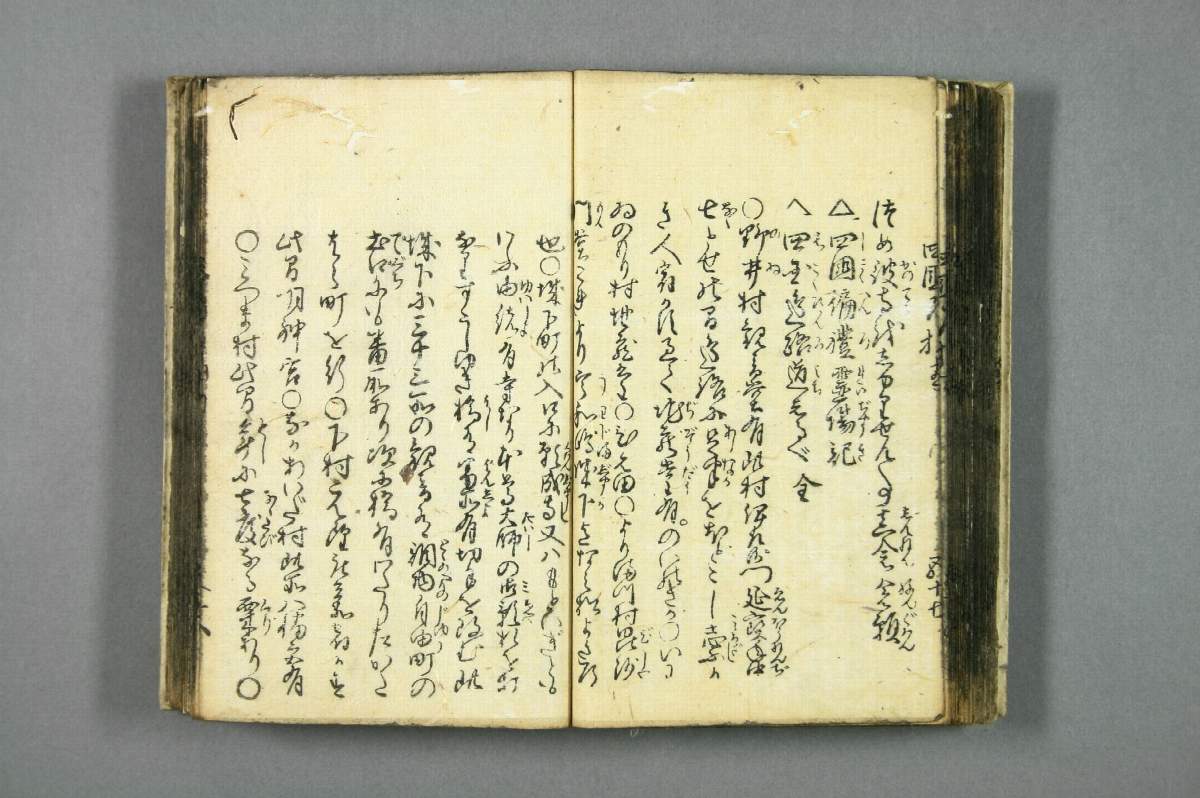
Izaemon and his sandals
野井村、観音堂有。此村伊左衛門、延宝年中七とせの間、辺路に足半をほどこし、志ふかき人、宿かす。
“Village of Noi: a Kannon hall. Izaemon, of this village, gave ashinaka sandals to pilgrims for seven years during the Enpō era; he is a man of deep generosity, who gives lodging.”
Ashinaka are straw half-sandals, the kind the guide recommends for walking. The Enpō era runs from 1673 to 1681: this is the oldest datable gift of goods to Shikoku pilgrims. Shinnen names Izaemon in the guide, then again in the Kudokuki. Naming the generous, twice: that was his way of encouraging others.
Fourth answer: he asked
At the beginning of the guide, in the version we are reading, a note speaks to the reader:
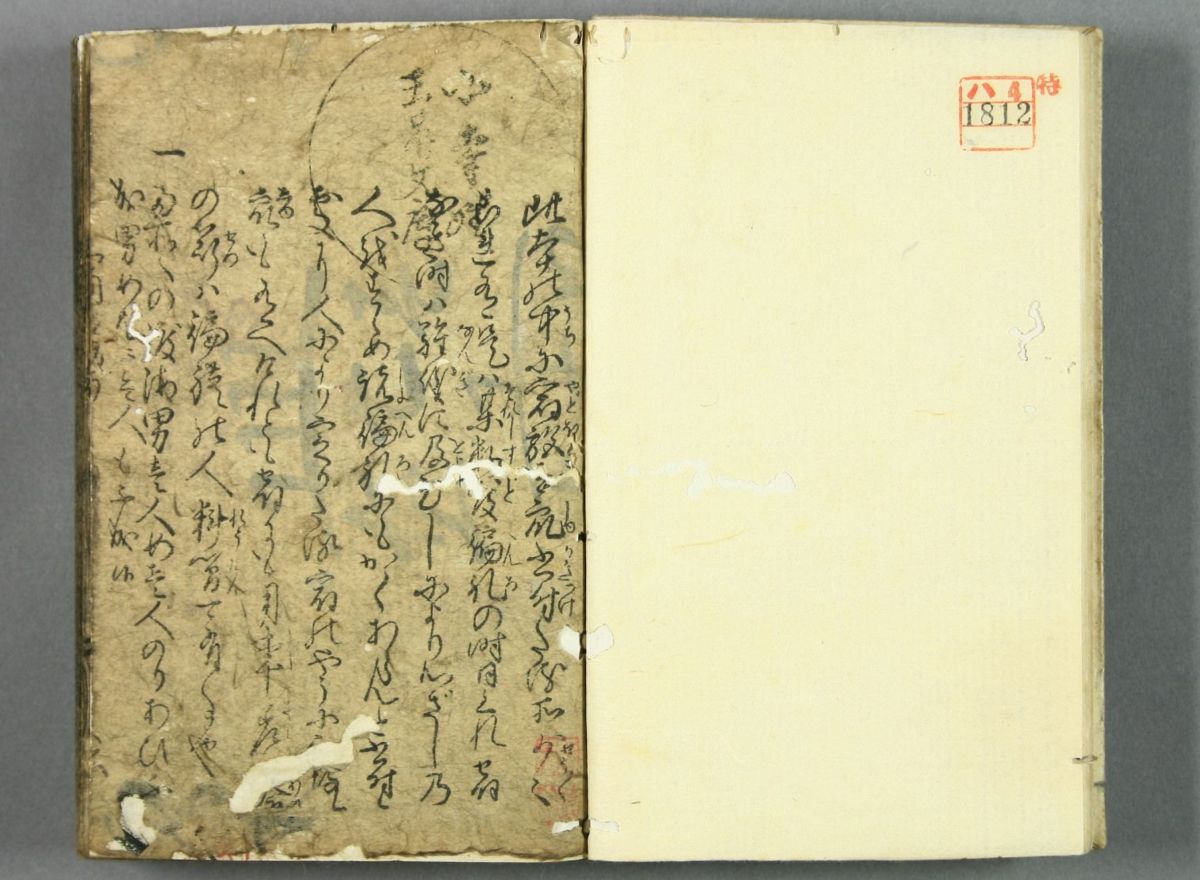
此本の中に宿設す衆書付たる所少々これ有。是は某数度偏礼の時、日くれ宿なき時は難儀に及びしにより、心ざしの人をすゝめ、諸偏礼にもかくあらんと書付し處に、人により定かたる宿のやうに心得し衆も有へけれとも、宿にも用事差合の節は偏禮の人料簡可有事也。
“In this book I have noted, here and there, people who offer lodging. This is because, on my many pilgrimages, when night fell and I had nowhere to sleep, I knew real hardship. So I encouraged people of good heart, and I wrote them down thinking it would be the same for all pilgrims. Some may take them for regular inns. But hosts have their own affairs and their own obstacles: on such days, the pilgrim must understand.”
One clarification, to be accurate. This note is not in the first edition of 1687: the historian Kondō Yoshihiro established this by comparing the two editions. It appears in the re-engraved version, the one our copy belongs to, dated between 1698 and 1724. Shinnen died in 1692. Did he leave these lines, or were they written in his name? We do not know. Inada believes the changes in this version faithfully follow his intentions.
For our purpose, it hardly matters. The note says what the facts already show: the hosts in the guide were not there by chance; someone had gone to find them. And it proves something else. If the publisher has to remind pilgrims that these houses are not inns, it is probably because pilgrims were turning up in numbers. The same page asks them to bring fuda for those who offer lodging and tea (宿札茶札用心有べし). In a single generation, the list had become a habit.
Shinnen and the zenkonyado
These houses would later be called zenkonyado (善根宿), “lodgings of good deeds”. The word is not in the guide; the idea is, at Kubokawa: “people who do good works” (善根なす人).
Shinnen did not invent the gesture. Densuke, in Uwajima, was lodging pilgrims before the guide existed. But look at the dates:
- 1682: he builds the Shinnen-an.
- 1687: he prints the names of the hosts. The book goes through three printings in a year.
- 1690: he publishes tales promising good fortune to those who lodge pilgrims, and notes that “many” are doing so.
- 1691: a pilgrim from Kyūshū sleeps at the homes of two hosts on his list, without paying.
- Around 1700: pilgrims have to be reminded that these houses are not inns.
Before him, isolated gestures. With him, a network you could follow from village to village, a shelter, and a reason to open your door. It is with Shinnen that the zenkonyado becomes a custom of the pilgrimage. Inada, who spent years on this guide, puts it in his own way: when you look for the origin of the welcome Shikoku people give to pilgrims, you arrive at Shinnen, who looked for people to lodge them and wrote down their names. This, he believes, is one of the roots of o-settai.
Two limits, so as not to embellish. Some thirty places along 1,200 km is not a roof every night: the guide itself points out the stages “with no lodging”. And the guide does not say what a night cost with each host; Yano’s diary tells us, for two of them.
Shinnen’s legacy
Today’s pilgrim walks within an extraordinary network, patiently built up: stone markers and arrows at every junction, shelters along the roads, temples that welcome you, local people ready to help. Before the Internet, you could pick up at temple 1 a list of free or cheap places to stay. It passed from hand to hand, like Shinnen’s little book three centuries earlier.
Those who have walked the pilgrimage fully self-supported, never staying in guesthouses, as I did, know how hard it can be. The crushing heat of summer. The endless roads of Kōchi. The sudden, torrential rain. So when someone offers you a roof, a meal or even just a bath, the joy is beyond measure. It warms your heart for days, and long afterwards.
That evening, without knowing it, you are knocking on the door of Ichibei, of Izaemon or of the people of Tai. The gesture is the same. So is the rule: you ask, you accept a refusal, you leave your fuda. These houses are still called zenkonyado: see our article on today’s zenkonyado.
Shinnen rests at Suzaki-ji temple, in Mure, near Takamatsu, beneath a large tomb: not that of a poor wandering monk, but that of a man many admired.
I believe this seed was planted by Shinnen, the monk who had slept outdoors far too often. Then generation after generation of Shikoku people tended it with care, right down to us. That is why the story of Shinnen and his contemporaries means so much to me, and why it holds a special place on this site.
Sources. Shinnen’s guide, Waseda University Library copy (Wikimedia Commons, public domain), read and translated by henro.fr; this is the re-engraved version of the guide. Inada Michihiko, Shikoku henro michishirube, zen’yakuchū (四國徧禮道指南 全訳注), Kōdansha, 2015, pp. 5, 17 and 268–274, and his lecture at Kagawa University (2015), pp. 4, 6–7, 9 and 16–17. Shiraki Toshiyuki, “宥辨真念と四国遍路”, Nihon kenkyū 21, 2000, pp. 187–212. Ehime Prefecture, 『遍路のこころ』 (2002), “遍路の宿” and 『四国遍路のあゆみ』 (2001), drawing on Shinjō Tsunezō, Kondō Yoshihiro and the diaries of Chōzen (1653) and Yano Ichien (1691). List of hosts: henro.fr, with the help of Claude (Fable 5.2).